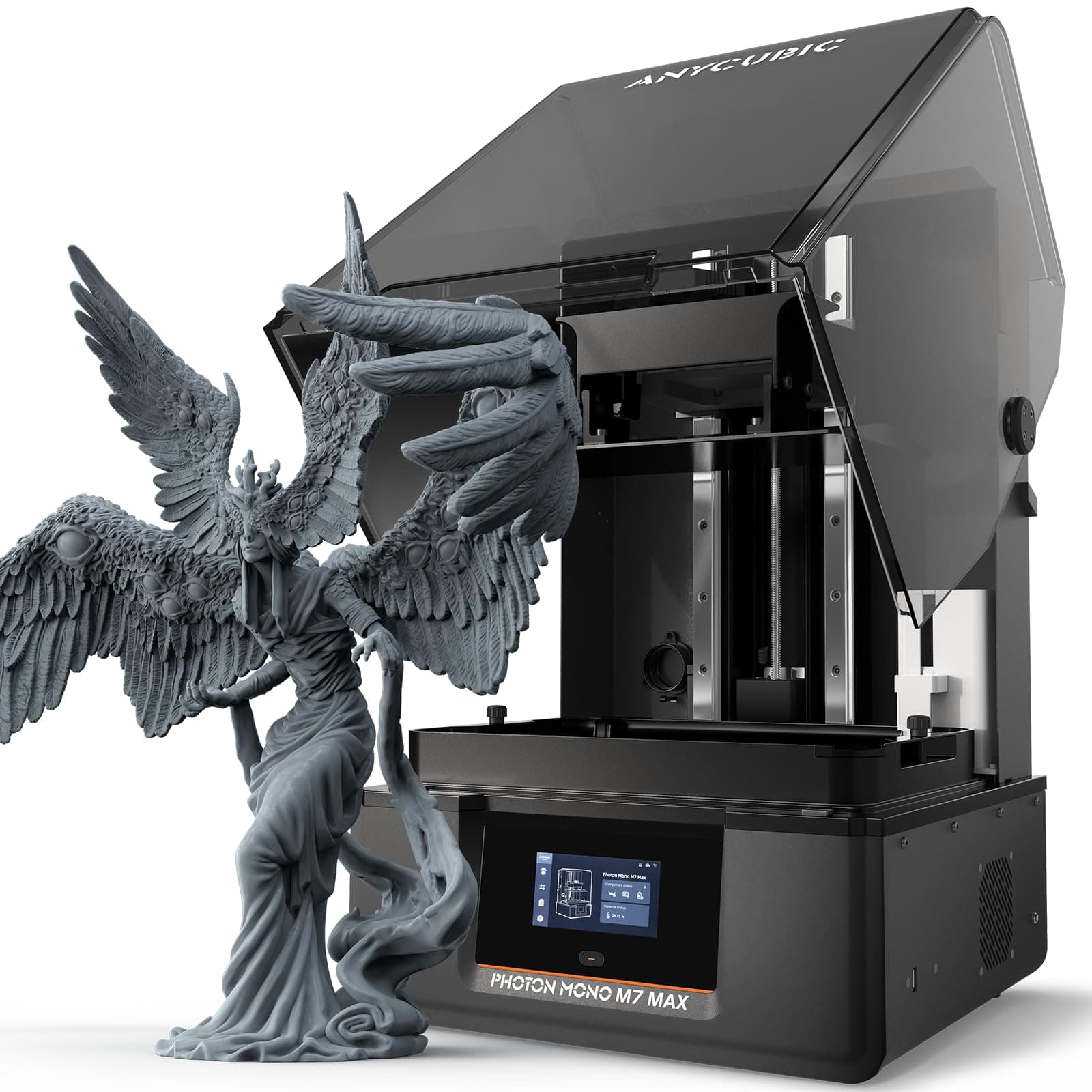
ANYCUBIC Resin 3D Printer, Photon Mono M7 MAX 13.6-inch 7K Mono LCD, High Precision, Temperature Control, Efficient Productivity, Large Printing Size of 11.73 x 6.46 x 11.81 Inch L-Mono M7 MAX
Overview
The ANYCUBIC Photon Mono M7 Max is a large-format resin SLA/DLP printer built for users who need high-detail output at production scale. With a 13.6-inch 7K monochrome LCD and an expansive build volume (11.73 × 6.46 × 11.81 inches), it targets professional hobbyists, small studios, dental and jewelry labs, and product designers who must print large batches or taller parts without tiling. The machine emphasizes consistent results via temperature control and the speed advantages of a monochrome panel (shorter exposure times and longer screen life). Expect very fine surface detail suitable for miniatures, dental models, and castable masters, but also plan for standard resin post-processing and workshop ventilation.
Key Features
- 13.6-inch 7K monochrome LCD panel for high XY detail and longer effective lifespan compared with RGB screens.
- Large build volume: 11.73 × 6.46 × 11.81 inches (approx. 298 × 164 × 300 mm) for single-run multiple parts or tall models.
- Fine layer control with typical resin layer heights down to 0.01 mm (10 microns) for smooth surfaces and crisp details.
- Integrated temperature control to stabilize resin and exposure conditions, improving dimensional consistency across prints.
- Compatible with common 405 nm photosensitive resins (standard, flexible, castable, dental); works with popular slicers and Anycubic software.
Pros & Cons
Pros
- Very large printable area (11.73 × 6.46 × 11.81 in) lets you print multiple miniatures or tall parts in one job.
- 13.6-inch 7K monochrome LCD delivers finer XY detail and longer screen lifespan than RGB panels.
- Monochrome exposure enables faster layer cure times, increasing throughput for batch jobs.
- Built-in temperature control helps maintain consistent curing and repeatable results in varying ambient conditions.
- Suitable for high-detail workflows: jewelry, dental models, miniatures, and precise prototyping.
Cons
- Resin printing requires post-processing (washing and UV curing) and good ventilation due to fumes.
- Larger footprint and higher resin consumption compared with small desktop resin printers.
- Higher upfront cost than entry-level resin machines; ongoing consumables (FEP, resin, vat) add expense.
- Not plug-and-play for complete beginners — initial setup, slicing, and maintenance have a learning curve.
Recommendations
- Hobbyists and miniature painters who want to print multiple high-detail figures in one run without tiling.
- Jewelry designers and casting professionals producing detailed masters for investment casting.
- Dental labs and orthodontic model production where accuracy and repeatable detail are required.
- Product designers and small-batch manufacturers needing high-fidelity prototypes or low-volume production parts.
Frequently Asked Questions
View this page in: English · Español
Advertisement
More to Explore
from Amazon