
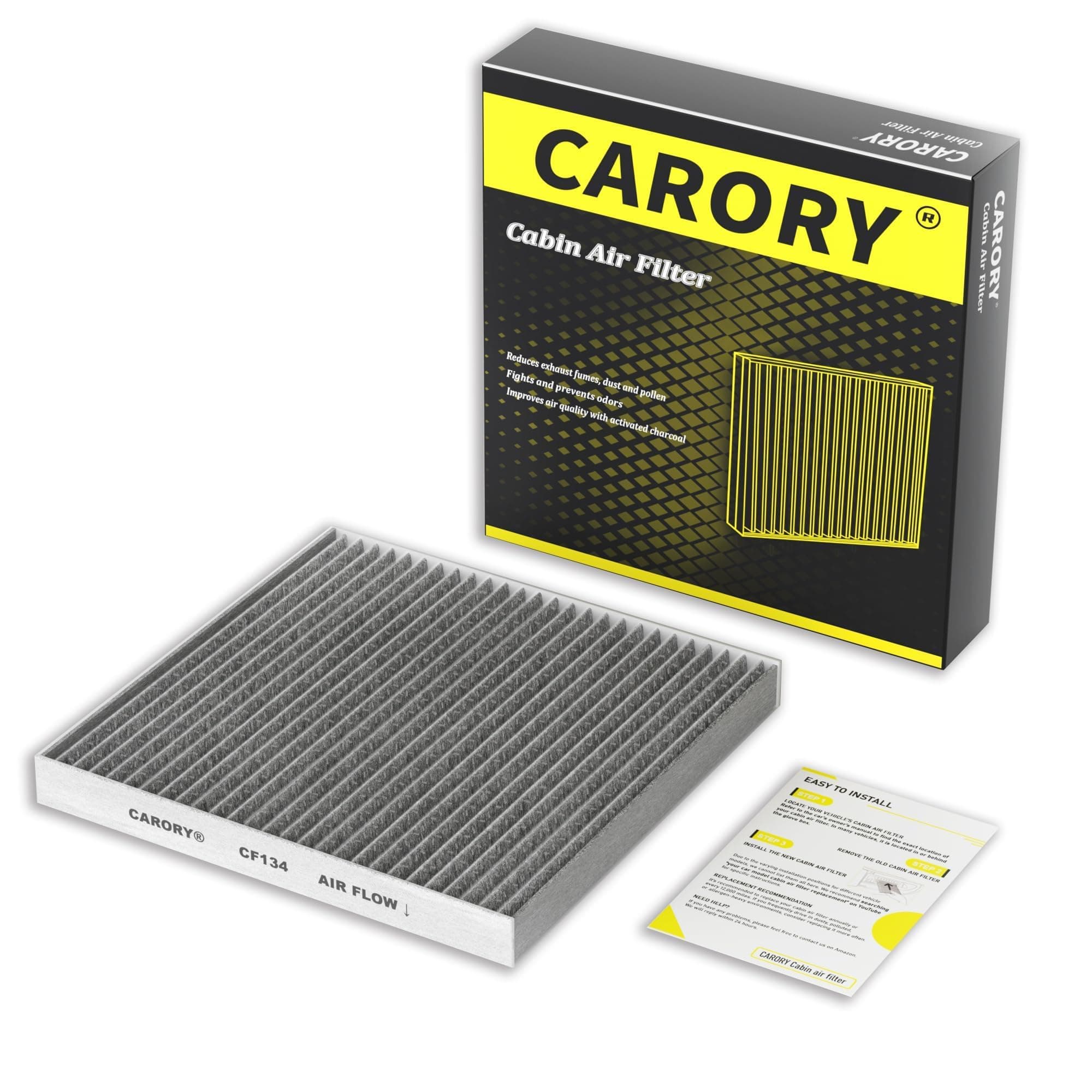
Cabin Air Filter w/Activated Carbon for Honda Accord 2003–2022, Civic 2006–2015, CR-V 2007–2016, Odyssey 2005–2017, Pilot 2009–2022, Ridgeline 2006–2025, Acura MDX 2007–2020 and More CF134
Overview
The Carory Cabin Air Filter CF134 is an activated-carbon, pleated replacement filter designed for a wide range of Honda and Acura models (including Accord, Civic, CR‑V, Odyssey, Pilot, Ridgeline and MDX across many model years). It combines a pleated non‑woven filtration layer with a carbon layer to trap dust, pollen, mold spores and many common odors and VOCs that enter the ventilation system. This aftermarket option is aimed at drivers who want improved in‑car air quality and odor reduction at a lower cost than some OEM parts, and who prefer a quick DIY swap—most installations are glove‑box access and take 5–15 minutes. Check fit by matching part number CF134 to your vehicle year and trim before purchase.
Key Features
- Activated carbon layer: adsorbs odors, volatile organic compounds (VOCs) and light smoke for improved cabin smell
- Pleated non‑woven filtration media: designed to trap pollen, dust, mold spores and larger particulates common in vehicle HVAC systems
- OEM-compatible CF134 fit: marketed for Honda Accord (2003–2022), Civic (2006–2015), CR‑V (2007–2016), Odyssey (2005–2017), Pilot (2009–2022), Ridgeline (2006–2025), Acura MDX (2007–2020) — verify your vehicle's part number
- Sturdy plastic frame and pleat design: maintains shape and airflow across the HVAC housing for reliable performance
- User-friendly installation: glove‑box access on supported vehicles; replacement interval recommended every 12 months or 12,000–15,000 miles depending on driving conditions
Pros & Cons
Pros
- Activated carbon layer reduces odors, smoke and many VOCs in the cabin
- Pleated multi-layer media captures dust, pollen and common allergens for better air quality
- OEM-style CF134 fit for many Honda and Acura models simplifies replacement
- Quick, tool-light installation (typically 5–15 minutes) behind the glove box
- Cost-effective aftermarket alternative to OEM filters
Cons
- Not a certified HEPA filter—may not remove ultrafine particles below ~1–2 microns as effectively
- Activated carbon effectiveness declines over time and with heavy pollutant exposure
- May come as a single filter (verify pack count before buying) rather than a multi-pack
- Fitment should be double-checked for specific model years and trims despite broad compatibility
Recommendations
- Drivers with seasonal allergies who want to reduce pollen and airborne irritants inside the cabin
- Urban commuters seeking to minimize vehicle odors and light exhaust or traffic pollution
- Owners performing routine HVAC maintenance who prefer a budget‑friendly, OEM‑style replacement
- Smokers or drivers who frequently transport pets and want better odor control between deep cleanings
Frequently Asked Questions
View this page in: English · Español
Price History
Advertisement
More to Explore
from Amazon